Gutters fail quietly. There is no alarm, no sudden breakdown, just a system slowly filling with leaves and grit while the house absorbs the consequences one rainy day at a time. To understand why gutter cleaning matters, it helps to follow a clogged gutter through a full year, because the damage changes with the seasons and almost none of it announces itself until it has become a repair bill.
Spring: The Overflow Begins
Spring rains are the first test, and a gutter packed with last fall's leaves fails it immediately. Instead of traveling along the gutter to the downspout, water sheets over the front edge in a curtain, or worse, over the back edge against the house. You may notice waterfalls off the roofline during storms, staining streaks on the siding, and mulch or soil washed out of the beds below.
What you do not notice is where the back-overflow goes: behind the gutter, into the fascia board and soffit. These wooden parts sit wet after every rain and begin to soften and rot. The gutter also gets heavier as debris absorbs water, and that weight works on the hangers with every storm, beginning the slow sag that will eventually pull sections loose.
Summer: Pests Move In and Rot Sets In
Summer turns clogged gutters into habitat. The damp debris holds standing water in pockets, and standing water is a mosquito nursery a few feet from your windows. Ants, earwigs, and other insects shelter in the moist layer, and birds sometimes nest in it outright. Wasps find the sheltered underside of a clogged, sagging gutter line attractive for their own construction projects.
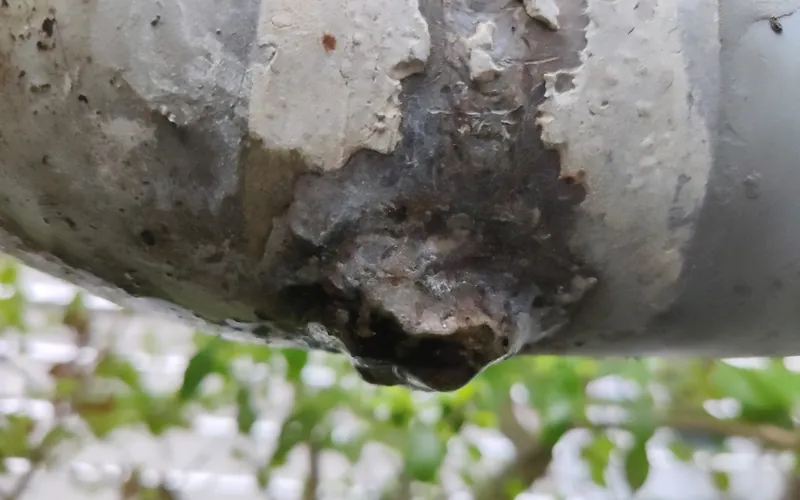
Meanwhile the fascia rot that started in spring progresses in the warm months, and the first plants appear. Wind-blown seeds germinate in the rich, wet debris until small weeds and even tree seedlings grow along the roof edge. Those roots and the constant moisture widen seams and joints, so the gutter starts leaking at its corners even where it is not overflowing, dripping steadily onto the siding and foundation plantings below.
Fall: The Weight Problem Arrives
Fall delivers the heaviest load of the year directly into a system that is already full. New leaves land on old, compacted debris, rain soaks the whole mass, and the gutter's weight can multiply. Hangers bend or pull out of rotting fascia. Sections tilt the wrong way, so water pools in the middle instead of draining, which adds still more weight in a cycle that ends with a section tearing away, sometimes during a storm, sometimes audibly in the night.
The water that cannot travel to a downspout keeps landing at the foundation. By fall, the soil against the house has been saturated repeatedly for months. Basement and crawl space seepage often appears now, and homeowners blame the foundation when the actual failure is twenty feet above it. Our gutter cleaning guides explain how to trace these problems back to the roofline before paying for foundation work.
Winter: Ice Finishes the Argument
In cold climates, winter is when a year of neglect presents its largest bill. Water trapped in clogged gutters freezes solid, adding ice weight to a system already strained. At the roof edge, the ice contributes to ice dams: ridges of ice that trap melting snow on the roof behind them. That pooled meltwater has nowhere to go but under the shingles, into the roof deck and the walls below, appearing as ceiling stains in the rooms underneath.
At ground level, the year's worth of foundation saturation meets freezing temperatures. Water in soil expands as it freezes, pressing against foundation walls in a cycle that can open and widen cracks over a single hard winter. None of this damage required a dramatic event. It required only water, delivered to the wrong places, repeatedly, by a gutter that stopped doing its one job.
The Repair Bill, Itemized
Consider what a year of clogging can set in motion: rotted fascia and soffit carpentry, gutter sections rehung or replaced, siding and paint damage, basement waterproofing that may not have been needed, ice dam interior repairs, and pest treatments. Each item individually costs far more than the cleanings that would have prevented it. That is the real economics of gutter maintenance: the cleaning is not the expense. It is the discount.
The Simple Alternative
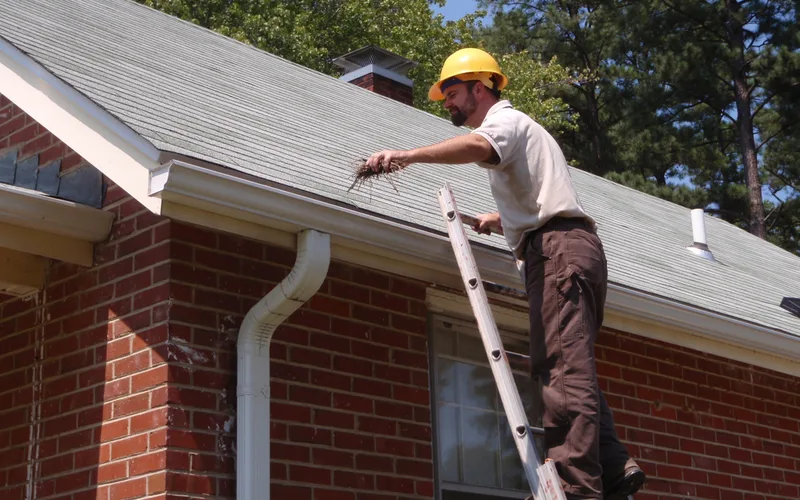
The routine that prevents all of this is unglamorous: clean the gutters in late spring after the seeds and blossoms fall, and again in late fall after the leaves are down, more often if your roof sits under heavy trees. Clear the downspouts as part of the same job, and make sure they discharge water well away from the foundation. While the gutters are being cleaned, have their pitch, hangers, and seams checked; small corrections made then prevent the sagging and leaking described above.
If ladder work is not for you, that is a legitimate decision rather than a failure. Professional cleaning costs a fraction of any single repair in this article, and a good service reports the condition of the whole system while they are up there. Your gutters ask for attention twice a year. This article is what happens when they do not get it.
One More Check: Where the Water Lands
Clean gutters are only half the system. The downspouts must carry the water somewhere harmless, and this is where many otherwise tidy homes quietly fail. Walk your home during a rain and watch each downspout. Extensions should discharge several feet from the foundation, onto ground that slopes away from the house. A downspout that ends at the foundation wall, or that pours onto a walkway that tilts back toward the house, delivers the roof's entire rainfall to the one place gutters exist to protect.
Fixing this is usually simple: add or lengthen an extension, adjust a splash block, or correct the soil grade so it falls away from the walls. It is unglamorous work that takes an afternoon, and it completes what the cleanings start. A gutter system is a promise that roof water will be collected and sent somewhere safe. The cleaning keeps the promise possible; the drainage at the bottom is where the promise is kept.
The Twice-a-Year Gutter Checklist
Each cleaning visit, in late spring and again in late fall, should cover the whole system:
- Scoop and bag all debris from every gutter run.
- Flush each downspout and confirm it runs clear.
- Check hangers, seams, and joints for sagging, leaks, and pulled fasteners.
- Confirm the gutter pitch still drains toward the downspouts.
- Check that downspout extensions discharge several feet from the foundation, onto ground that slopes away.
- Feel the fascia behind the gutter for soft spots that suggest rot.
The roof above the gutters has its own maintenance decision, and it follows the same evidence-first logic. Our guide to repairing or replacing your roof shows how to make that call.
Sources and Further Reading
The guidance in this article was checked against publications from the following organizations:
- Insurance Institute for Business and Home Safety: Routine Roof Maintenance. Research on how roof drainage, gutters, and downspouts protect a home from water damage.
- National Weather Service: Flood Safety. How water behaves around homes during heavy rain, and how to stay safe.
- Ready.gov: Floods. Federal guidance on preparing a home for heavy water and recovering afterward.